And the DNC wraps; who’s excited for the RNC?
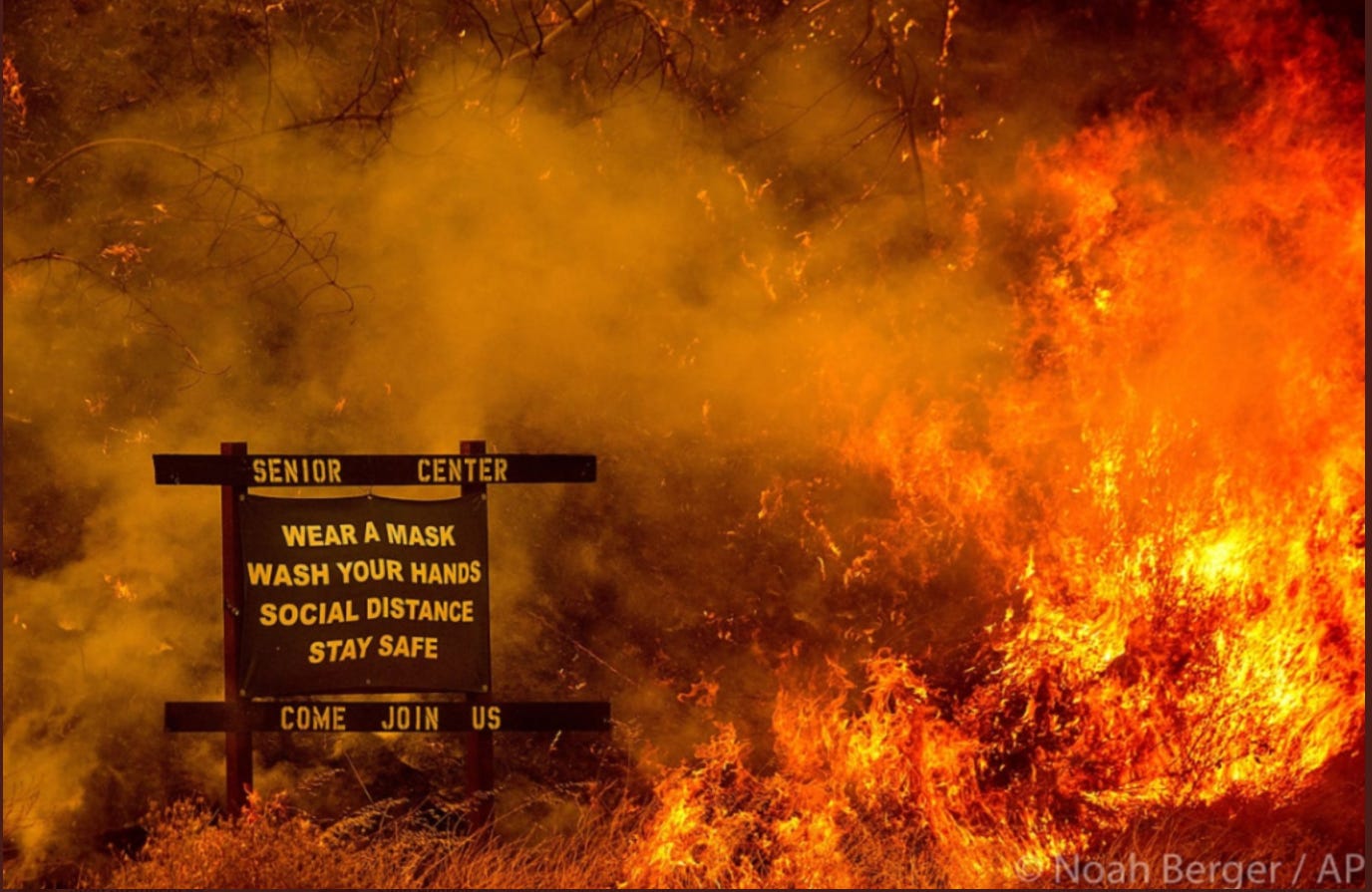
If a picture is worth 1,000 words, this picture from the California wildfire is the longest story ever told.
Happy Friday.
Bite One: About that Trump ad on the WaPo homepage
Media world freaked out yesterday about the President’s digital ad buy on the Washington Post’s home page (head over to Mediagazer to see for yourself). There was a full homepage takeover, replete with :30-video and banner ads, and boy, lots of pearls were clutched.
Here’s the HPTO:
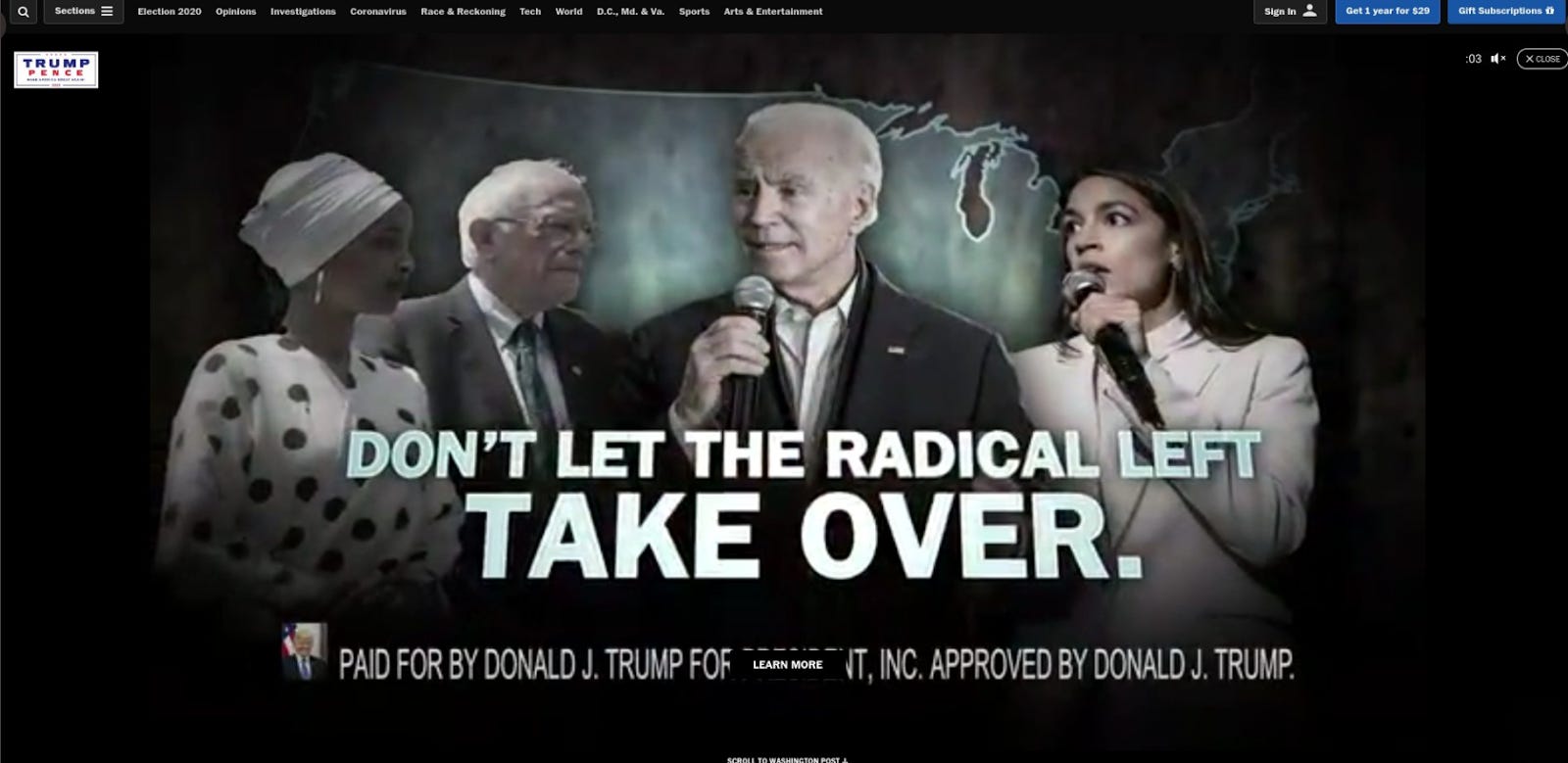
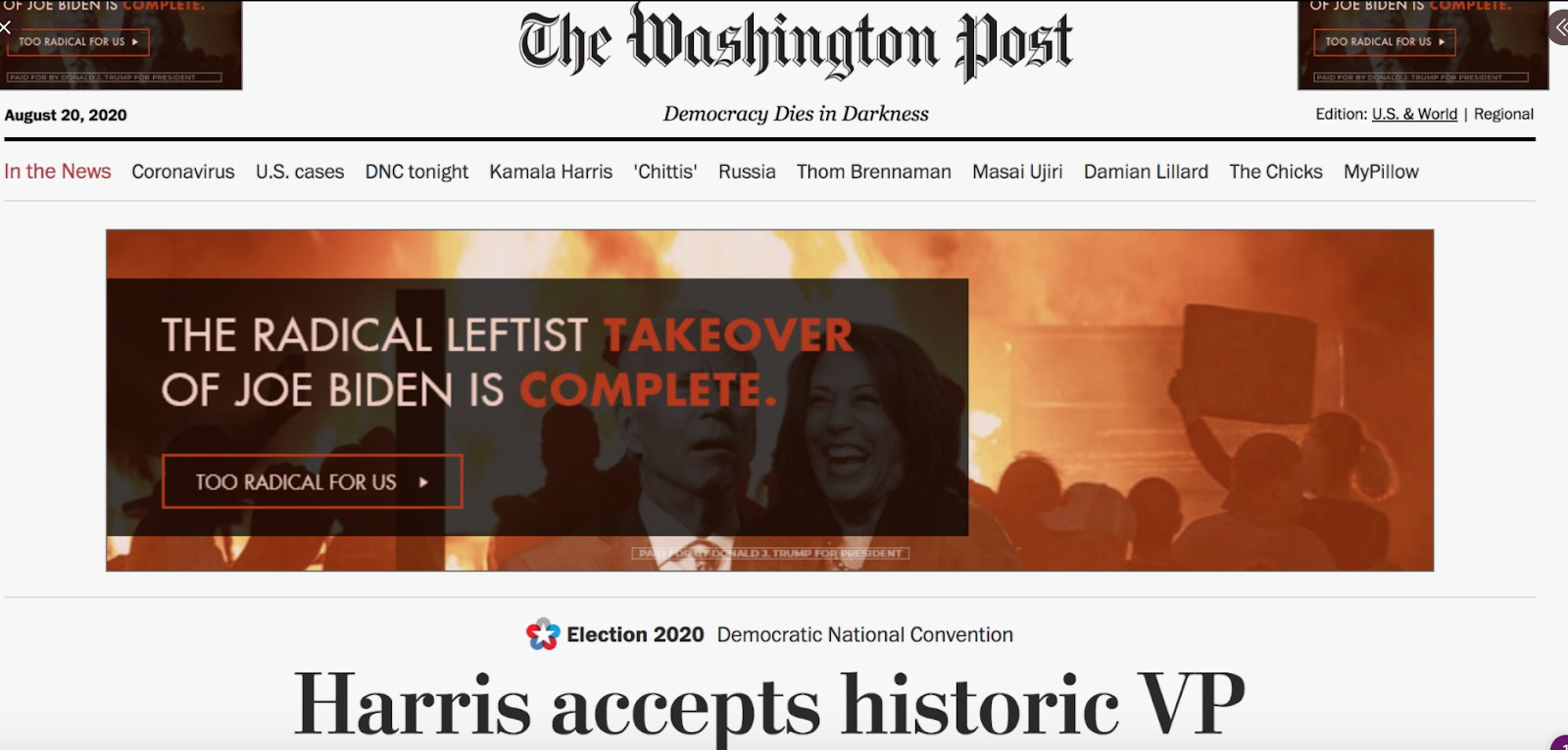
Journalists and journalism professors cry foul, saying how could a newspaper let the President run an ad; how could editorial sign off on this knowing that it’s misleading? (Trump also had big buys in the Wall Street Journal, YouTube, Hulu and FoxNews.)
A disclosure: I used to work on the ad sales side of the Washington Post.
These questions show a lack of understanding of how the business works. The same people moaning about the sanctity of the homepage or how DARE a newspaper sell this type of ad to the president are the same people who get up on their soapbox (or, yes, a newsletter; I am nothing if not self-aware) and shout how journalism needs to be funded.
Now, you can argue that a HPTO isn’t the best user experience. The mechanics aren’t the best, and the idea that the homepage is prime digital real estate is a vestige of an earlier web.
But how do you square the whole funding of journalism thing? Now, you might have an argument if, say, a QAnon SuperPAC wanted to buy an ad (and yes, the Trump ad brushes up against that line), that you wouldn’t run it because of dangerous lies, money be damned.
But this is why news organizations have lawyers. Very good ones.
I have to imagine that both the newsroom, which pays very close attention to the ads that run in its pages (side note: I once had Marty Baron sternly suggest that a piece of sponsored content we were producing for a large company was not in the best interest of readers) and the company’s lawyers made sure the ad wasn’t egregious.
But the framing from journalists and media professors who have a passing understanding of the media business model but find themselves instead weighing in with absolute knowledge is part of a larger media problem. Media literacy and literacy about the media business isn’t just for our readers, but should also be mandatory for its practitioners. Understand how this shit works.
What could be a greater slight, at the publication’s expense, than forcing its owners to acknowledge they’re not in a position to turn down Trump’s money?
I’m sure the Washington Post, owned by a man who literally has $196 BILLION (as of this writing), is on its hands and knees begging for a couple hundred grand (at best) ad buy from the president’s campaign.
(And yes, I am fully aware that the world’s wealthiest individual has not played with well with the paper’s union.)
Now, if the campaign asked the paper’s branded content studio to create sponsored content, then we can start having conversations around the ethics of the journalism business. But sources tell me that they will not have to create branded content for the President.
Bite Two: DNC wraps and onto Charlotte
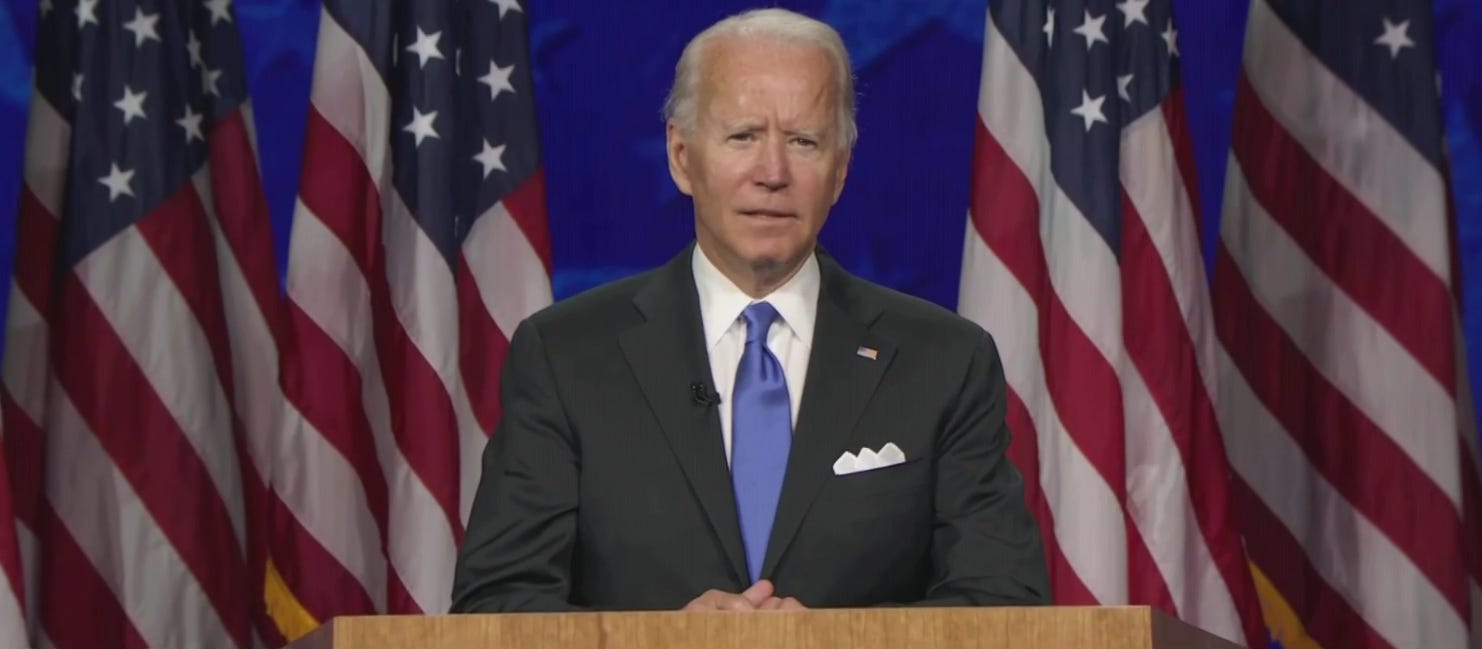
The Democratic National Convention, the Dems’ quadrennial industry conference, wrapped up last night with a capstone speech by its party’s nominee for the presidency, Joe Biden. And like every other industry event trying to navigate the effects of the coronavirus, the DNC went virtual.
For an event that is typically defined as raucous—Balloons! Confetti! Live music! Applause breaks every other paragraph—the DNC was more muted, more intimate.
Two things: one, we are in the Whiplash Era, where our heads ping-pong from crisis to crisis, either self-inflicted or mismanaged. I mean, as the DNC was heading into its final day, Steve Bannon, the architect behind President Trump’s successful 2016 campaign, was indicted on fraud charges, and was arrested after being investigated by the Post Office for bilking unsuspecting rubes who wanted to build a wall. Instead, their funds went to Bannon and associates’ pockets. And that was just yesterday.
The other thing, giving red meat speeches, designed to get people excited, to empty arenas or in front of a camera changes the way the message is perceived. And as we are in the middle of one of the most devastating crises our nation has faced, the DNC set a tone of somberness, thoughtfulness, peacefulness.
As The Atlantic wrote this morning:
Instead of appearing onstage, as participants have in years past, politicians and activists and voters simply recorded videos of themselves, often from their homes: politics’ kitchen table, no longer merely proverbial. There was some awkwardness, yes, as cues got jumbled and cameras captured politicians energetically delivering their speeches to empty rooms. Some of the Zoom-ified videos were shaky and grainy. That didn’t matter. In fact, it helped. Politicians are forever in search of ways to telegraph authenticity; here, as the DNC went DIY, was one.
Kamala Harris, making history as she accepted her party’s nomination on Wednesday, shared her life story and connected it to the present political moment. She delivered her speech not to a crowd in a cavernous arena, but rather to people gathered at home. The address read not as a speech at all, but as a conversation.
The production value of a remote DNC was impressive; producing an event (virtual or live) is a damned miracle every time and there were few significant errors. And I wouldn’t be surprised if some of the folks that put this event on will be sought by media companies in the near future to help them pivot to virtual events.
As one chief revenue officer emailed me this week after writing about virtual events: “Virtual events are keeping the lights on right now.”
For what it’s worth: I watched the convention on my Roku TV using the YouTube app and viewing from the WP Live stream. All the network coverage on YouTube had their lower thirds and it was distracting.
One final thought: next week’s Republican National Convention will be the polar opposite of the DNC’s. In tone, in subject, in pretty much every way imaginable. One thing that I’m sure will be the same, though: media rushing out to report on TV ratings.
Los Lobos, “When the Circus Comes”
Thank you for allowing me in your inbox, today and every day. If you have tips or thoughts about the newsletter, drop me a line! Or you can follow me on Twitter. If you liked today’s edition, please consider sharing across your social networks. Have a great weekend. Stay safe; stay healthy; and I’ll see you on Monday.
Some interesting links:
Are New Yorkers Wearing Masks? Here’s What We Found in Each Borough (NYT)
News Publishers Join Fight Against Apple Over App Store Terms (WSJ)
How to talk—and ask—about QAnon (WaPo)
Stuttering through it: how a 13-year-old boy delivered the best speech of the DNC (The Atlantic)
Struggling retailers rush to file for bankruptcy as fears of a second wave of coronavirus linger (CNBC)
Some countries are using the pandemic as an excuse to crack down on journalism (Nieman Lab)
How Far-Right Personalities And Conspiracy Theorists Are Cashing In On The Pandemic Online (Time)
‘Game of whack-a-mole’: Spotify has a counterfeit podcast problem (Digiday)
Facebook Braces Itself for Trump to Cast Doubt on Election Results (NYT)
Discover more from The Sternberg Effect
Subscribe to get the latest posts sent to your email.


Discussion
No comments yet.